
Consumer brands & growth
Scaling a Food Business in Colorado Without Outgrowing Your Cash
Raj Babu of BFG Partners on scaling a Colorado food brand: understand margins, plan for cash needs, prove retail demand, and find the right support.
Scaling a food business in Colorado starts with a question that is less exciting than landing another grocery account: can the business afford the growth? For a packaged-food brand, more distribution can mean more cash committed to production, promotions, and delivery before that growth pays back.
Raj Babu, a partner at BFG Partners, returned to that tension throughout his Mile High Makers interview with Majid Boroujerdi and Jeff Schell. His advice is not to stop growing. It is to understand the economics of each channel, prove that customers want the product, and build the operating capacity to support the next step.
For founders moving from early sales toward broader retail distribution, the useful question is not simply how to get bigger. It is how to make the next stage of growth repeatable.
Key takeaways
- Model the cash needed for expansion, not just the sales it could generate.
- Manufacturing margin is only the starting point: promotions, freight, fulfillment, and overhead still matter.
- Prove demand across stores before treating a bigger store count as success.
- Use Colorado's community and technical resources, while looking beyond the state when the business needs it.
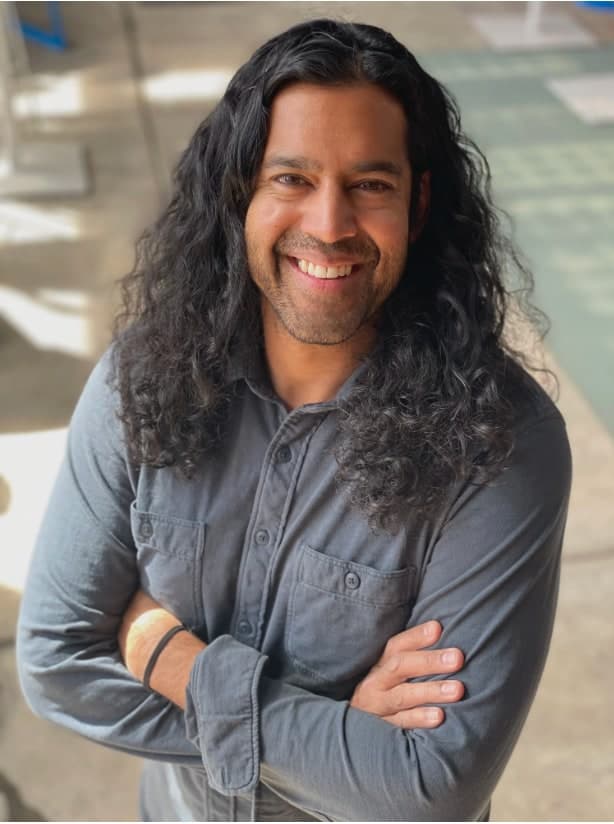
The operator behind the perspective
Raj brings an operator's perspective to investing. His BFG Partners biography identifies him as a former president and chief operating officer of Birch Benders and former president of Cappello's. He also held strategic leadership roles at WhiteWave Foods.
This article draws on our interview and develops practical takeaways from it. It is written by Mile High Makers, not by Raj.
Scaling a food business in Colorado starts with cash visibility
Raj's first recommendation is direct: The biggest thing I tell people is to really understand where the cash is, right, at all times.
He means cash inside the company, not a sense of where consumer demand might be heading.
In his account of retail economics, a brand can spend money to get onto shelves, fund promotions, manufacture inventory, and move it through distribution. Those demands arrive at different points. A growing sales forecast does not, on its own, show whether the company can cover them.
He describes founders approaching investors from a position of weakness after losing track of where their cash went. That is his experience, not a claim that every food startup runs out of money for the same reason.
The practical application: put the next expansion on a cash calendar. List when production and channel costs must be paid, when customer payments are expected, and what happens if sales or collections arrive later. Review that alongside the profit-and-loss statement, rather than treating the two as interchangeable.
Food brand margins: leave room for the costs after manufacturing
A product can look attractive at the factory gate and much less attractive after the work of selling it. Raj highlights brand-funded grocery promotions as one of the expenses founders need to understand. The discount shoppers see is not necessarily a cost the retailer absorbs.
Asked what he looks for, Raj says he likes to see a 50% manufacturing margin in food. He also discusses 35-40%, or a credible path there, as an important consideration in his investment decisions. These are his category-dependent investing benchmarks, not universal industry requirements or a promise of funding.
Crucially, he is talking about product economics before the trade promotions discussed in the interview, not a company keeping half its sales as net profit. Freight, selling costs, people, and other operating expenses still need to be supported.
Before presenting a margin number, make its definition explicit. Which costs are included? Which sit elsewhere? Then connect any improvement plan to an actual change, such as a supplier quote or production run size, rather than assuming that getting bigger will automatically fix the economics.
Direct-to-consumer replaces costs; it does not erase them
When Majid asks whether direct-to-consumer sales avoid retail's costs, Raj reframes the comparison: DTC has a different profit-and-loss structure. The brand must get the product to someone's doorstep and pay for people to discover it.
That distinction matters especially for heavy or frozen products, which Raj flags as expensive to ship. A higher selling price on your own website is not enough to establish that the order is more profitable.
Compare channels using their actual costs. For retail, account for the relevant promotions and distribution expenses. For DTC, account for fulfillment and customer acquisition. Use consistent definitions so the comparison does not leave a major cost on one side and hide it on the other.
The interview does not establish one winning channel for all Colorado food brands. It offers a better decision rule: understand what each channel asks the business to fund before making it the growth engine.
Prove retail velocity, not just a longer store list
Raj calls proof of concept a central part of his assessment. In retail, one signal is velocity: how quickly products sell from store shelves, often expressed as units per store per week. Opening more accounts is different from demonstrating demand inside those accounts.
He wants to see evidence across several stores and potentially different retailers and regions. A result in one market does not automatically tell an investor what will happen elsewhere. He names the natural channel, including Whole Foods, Sprouts, and Natural Grocers, as a place where brands have historically established that evidence.
His Birch Benders example is concrete: Whole Foods demos helped build the business, and he credits a buyer there with suggesting a paleo pancake mix. The lesson is that retail can be a source of product learning, not simply a distribution endpoint.
For a founder's own review, compare ordinary weeks with promotional weeks and look across locations. Treat customer repeat-purchase evidence separately where it is available: a store's unit sales alone do not identify whether the same people bought again. Raj does not offer a universal velocity threshold in this conversation.
Build a strong core before adding more products
Raj describes Birch Benders' growth as a deliberate progression. Pancakes were the core. The company then demonstrated that the brand could extend into waffles and baking mixes, while being thoughtful about launching one new set of products a year.
That cadence was Birch Benders' approach, not a schedule every founder should copy. The useful principle is to establish a reliable base before asking the organization to support more complexity.
He also says the business focused on EBITDA early and operated around break-even before accelerating. Those are his recollections of the operating strategy. Separately, BFG's 2020 acquisition announcement confirms that Sovos Brands acquired the Denver-based company.
Before a new product launch, ask what it adds beyond another item to sell. Does it answer observed customer demand? Can the team support it without weakening the core? What additional cash does it commit? A plausible extension of the brand still needs an operating plan.
Use Colorado's strengths, then fill the specific gaps
Raj sees Colorado as especially good at getting food brands started. He is more cautious about the infrastructure required for their next stage: manufacturing, logistics, capital, and people who have already managed larger businesses.
This is his assessment of the ecosystem, not a ranking of Colorado against other states. He does not suggest that founders must leave. His point is that a Colorado headquarters does not require every investor, specialist, or production partner to be local.
That location question extends beyond food. In our debut-episode analysis, Majid and Jeff debate capital access and talent depth in Denver's startup ecosystem, including why a Colorado home base need not mean a Colorado-only network.
Two local starting points connect that discussion to practical support:
- Naturally Colorado offers education, networking, and mentorship in the natural-products community. Raj encourages founders to ask for help and build relationships early, before a problem becomes urgent.
- CSU Spur's Food Innovation Center in Denver lists product development, food analysis, and sensory and consumer testing among its services. It is a technical resource to investigate, not a guarantee of commercial production capacity or funding.
Start with the gap you actually need to close. Testing a formulation, finding a manufacturing partner, and hiring an experienced finance leader are different tasks. A strong network is most useful when the request is specific.
Five questions before the next growth commitment
Raj also emphasizes founder self-awareness: understanding what you do not know and bringing in people who complement you. Taken together, the interview suggests a practical growth-readiness review. These questions are our editorial synthesis, not a checklist Raj supplied:
- Where will the cash go? Map the next production run, channel commitments, and expected customer payments.
- What remains after selling the product? Separate manufacturing margin from the costs of promotions, delivery, acquisition, and overhead.
- What demonstrates demand? Bring store-level evidence and explain where it is strong, weak, or promotion-dependent.
- What deserves to scale? Identify the core product or channel that has earned expansion, rather than expanding everything at once.
- Who has solved the next problem? Seek the relevant operating experience before the business urgently needs it.
The opportunity for Colorado food entrepreneurs is not just to create products people try. It is to build businesses that can keep delivering them. Raj's central lesson is to make the economics and operating demands visible while there is still time to choose the next move.
From the conversation
Watch the full interview with Raj Babu
Hear the complete discussion with Majid and Jeff, including the decisions behind growing a food brand and Raj's perspective on Colorado's next chapter.
Why Colorado Is the Epicenter of Better-For-You Food
A Mile High Makers conversation about Colorado's role in better-for-you food.
Keep exploring Colorado business
- Colorado vs. Silicon Valley: Where Should Founders Build?
Majid and Jeff discuss where founders should build.
- Why is youth soccer so expensive in America?
Explore another business conversation, this time about youth soccer.
- How Lasse Lobmeyr is building Fussbally in Colorado
A service-business perspective on expansion, staffing, and consistent delivery.